



Kashrus Kurrents Spring 2012
Q: When my barber works on the area around my ear and temple, what I am allowed to let him do and what should I stop him from doing?

Kashrus Kurrents Spring 2012
Q: When my barber works on the area around my ear and temple, what I am allowed to let him do and what should I stop him from doing?
Summer 2012
Q: I have a number of utensils which need kashering through hagalah (immersion in boiling water). Which materials may and may not be kashered?
A: A fleishig utensil which comes into contact with hot milchig food or a milchig utensil which comes into contact with hot fleishig food needs to be kashered before further use. There are a number of methods for kashering, dependent upon the manner of contact between the utensil and the food. Perhaps the most common form of kashering is hagalah, in which the utensil is immersed in boiling water.
Metal
The Torah tells us that a vessel may be kashered if it is made from one of six metals: gold, silver, copper, iron, tin or lead.1 There are other metals and alloys which were not in common use at the time of Matan Torah that are currently used to make kitchenware, […]
Published Fall 2012
The Community and Its Shechita
One of the most basic features of a functional Jewish community, no matter the size, has historically been the shochet. Rabbis are a necessity, but were not always available; access to kosher meat is indispensable. The original American Jewish community of twenty-three Dutch Jews from Brazil, who landed in New Amsterdam (later, New York) in 1654, was led by the celebrated Asser Levy, who was also the shochet. Well before the first ordained rabbi, Rabbi Abraham Rice, arrived in 1840, shochtim served the needs of American Jews.
In the more established kehilos of Europe, the shochet was also deemed critical. An intrepid shochet, who risked his life in the early 1930s to provide kosher meat to Jews in Soviet Russia, remarked during an interview:
Kashrus Kurrents Winter 2013
Q: I am going to Israel and will be visiting the kosel (Western Wall). I know that it is customary to tear kriah upon seeing the kosel, but what exactly is the procedure?
A: The Shulchan Aruch paskens that when a person sees the cities of Judea he should say,
ערי קדשך היו מדבר and tear kriah.1 However, it is not customary to do so, possibly because we do not know exactly where the ancient cities of Judea are located.2 The Shulchan Aruch continues that when a person sees the Old City of Yerushalayim he should say, ציון היתה מדבר שממה , and then tear kriah again.3 Rav Shlomo Zalman Auerbach zt”l writes that even nowadays, one should tear kriah upon seeing the Old City.4 However, Rav Moshe Feinstein […]

Summer 2007 | Updated March 2025
[Originally titled: When Does One Pray When There Is No Day]
For an explanation of terms used below, refer to the glossary available on our site.
There was a time not long ago when kosher food was available only in major Jewish metropolitan areas. Finding kosher certified products on the road was a daunting task. “Kosher Tours” were limited to a few select areas. Today, the Star-K and other kosher symbols appear on thousands of food products. Kosher food is available from Fairbanks to Fiji, and from New Zealand to Norway. Kosher tours are now available to Alaska and Antarctica. With so many north and south destinations easily accessible to kosher consumers, the observant Jew now faces an array of fascinating questions. In parts of Alaska, and other locations north of the Arctic Circle, there are […]

Published Summer 1996, Reviewed Summer 2005
Summertime is a season synonymous with travel, vacation, and experiencing the great outdoors. For many, the great excursion meant traveling to Bubbi’s bungalow colony in the country. Today, we vacation the length and breadth of America. As we venture further and further away from the Catskill corridor, and experience the heartbeat of America, a universal question crosses the mind of every frum vacationer: “Is there anything Kosher to eat out there?” The answer is yes, more than you think; but it is still wise to plan before your journey.

Published Summer 2012
Click here for a handy printable map.
In today’s global market, the furthest regions of the Earth are much closer to home than one could ever imagine. For example, citric acid – an integral ingredient in soft drinks, ascorbic acid (Vitamin C) – a common nutrient, and amino acids used in numerous food items, are produced in a variety of Star-K certified Chinese plants. Star-K certified glycerine is manufactured in the Philippines and shipped to the United States. Mashgichim are frequently sent to Thailand, Fiji, Vietnam, and Indonesia to oversee production of kosher spices, tuna fish, and canned fruits and vegetables. The Star-K has an office in Shanghai to administer the supervision and inspect facilities.

In today’s office cafeteria a company microwave is prominently seen next to the corporate coffee urn. As the cold winter months approach many office workers look forward to a hot cup of soup or hot chocolate with their brown bag lunch. Can the office microwave be used for general Kosher use?
Updated January 2023
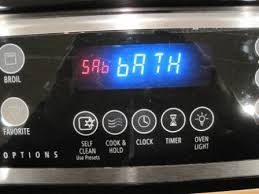
Appliance manufacturers, with the aid of modern technology, have designed kitchen appliances to be safer and more efficient while incorporating various features to enhance operation. However, the integration of this technology may pose a challenge to their proper use on Shabbos and Yom Tov.
THE INTRODUCTION OF SABBATH MODE
In 1997, a historic technological project was launched between a major appliance manufacturer and a kosher certification agency. Whirlpool Corporation (manufacturer of KitchenAid) approached STAR-K to help modify their ovens for use on Shabbos and Yom Tov. Prior to that time, many of their appliances did not conform to halachic guidelines.
Following some adjustments, a successful mode was developed. Whirlpool called this “Sabbath Mode” and was awarded a patent in 1998 for this concept.
STAR-K kosher certification on appliances falls into one of two categories:
1. Sabbath Mode Appliances – these are models that have unique software/hardware specifically […]
To download and print a handy UPDATED summary of these halachos, click here.
Winter 2005
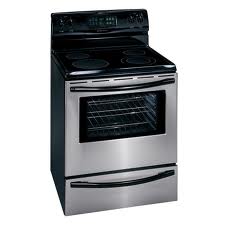
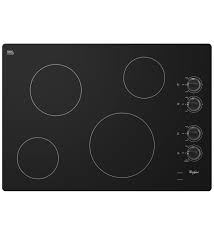
Cookin’ just ain’t what it used to be. Technological advances have taken the old stovetop and oven and upgraded them to be safer, more efficient, and smart for today’s lifestyle. They are also far more complicated. With these transformations, the observant Jew is faced with challenges that did not confront him in the past.
To understand how these changes affect the halachic use of the stovetop on Shabbos and Yom Tov, it is worthwhile to review some laws and concepts as they relate to cooking on Shabbos and Yom Tov.
DEFINITION OF MELACHA
Cooking on Shabbos is a Torah prohibition derived from the constructive acts performed in erecting the mishkan. This forbidden act is known as a melacha. There are 39 categories of prohibited acts.
MELACHA OF COOKING
The prohibition of cooking on Shabbos is defined as the act of using […]
Hashem, in His eminent act of chesed, created a world with abundant gifts expressly designed for the enjoyment of man. The Torah often limits, directs or restricts these worldly opportunities afforded to us to help us remember that we do not own this earthly bounty. Instead, we are using them with the permission of their Owner.
A clear example of this Divine Direction manifests itself in the foods we eat. Before we eat, we must make a bracha, a blessing that permits the consumption of kosher food. Certain foods are intrinsically non-kosher and are forbidden to us. Dairy and meat products, while they may be permissible individually, are forbidden to be mixed, cooked, processed or eaten together. These limitations, restrictions and directions form the basis of the laws of kashrus.
Those who carefully adhere to the laws of kashrus do not only restrict the mixing of dairy and meat products; they have […]
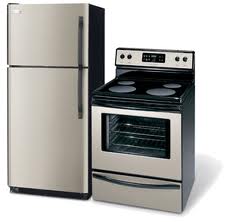
Can you remember back to the good ol’ days when your erev Shabbos and Yom Tov ‘To Do’ list included turning on your oven that would stay on until Havdalah, so you could eat hot food? What about unscrewing the refrigerator light bulb or taping down the button on the refrigerator door frame to prevent the light from turning on when you opened the refrigerator door? The Sabbath observer has long been challenged with a plethora of major kitchen appliance problems, however, the installation of technologically advanced safety features by well-intentioned appliance makers have made our 20th century appliance challenges seem like child’s play!
Published Fall 2011
One of the most popular articles in Kashrus Kurrents, dating back to my days in kollel, was the article entitled, Preparing the Home for Pesach, written by Rav Heinemann shlita, Rabbinic Administrator of Star-K. It appeared in one of the Kashrus Kurrents earliest Pesach editions.
Winter 2003
Few of us can remember life in the kitchen without the help of a refrigerator. Probably the most used appliance in the home, the electric refrigerator was mass produced as a home appliance in the early 1920’s. Although many improvements and modifications have taken place over the years, the basic principles employed in the home refrigerator remain the same.
How Refrigeration Works
The natural laws of physics dictate that as a liquid evaporates into a gas, it absorbs heat from the surrounding areas. In turn, these surrounding areas become cold. (If you touch the cylinder supplying gas to a barbecue grill, you will notice the cylinder getting cold and icy because the liquid in the cylinder is rapidly changing to a gas as it leaves the cylinder to provide fuel for the flame.) Although we may view our refrigerator as […]

Fall 2001
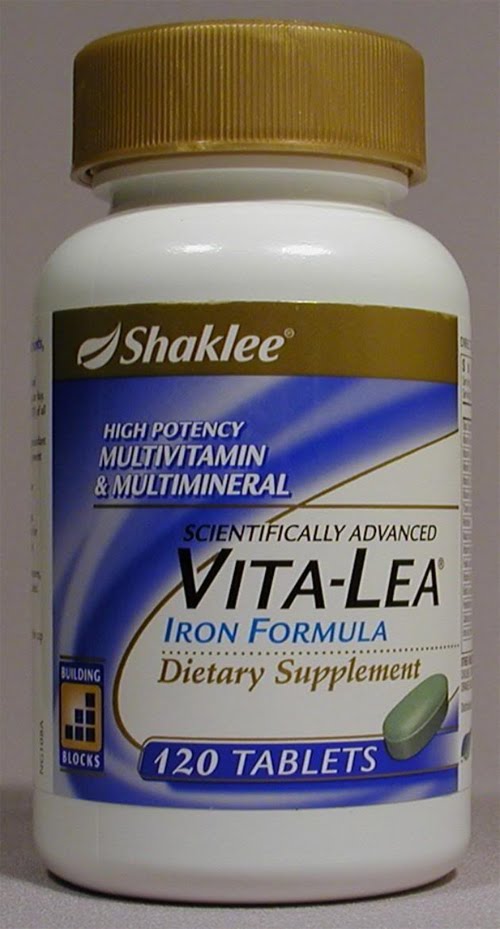
As the kosher consumer crosses Maryland’s spectacular Chesapeake Bay Bridge, it is hard to imagine that glucosamine, one of the most widely used arthritis remedies, is derived from the seafood shells found deep in the waters below. Sea shells are not the only surprising source of muscle and joint remedies. The levona (frankincense) used in the Beis Hamikdash, deer antlers, and an array of animals – including sharks and bees – also contain the raw materials of over-the-counter arthritis supplements.
STAR-K receives numerous inquiries regarding these products. This is no wonder, as over 40 million Americans suffer from some form of arthritis, and billions of dollars are spent each year on prescriptions and remedies. The following is an overview of how these products are manufactured and their kashrus status. Note: See disclaimer below.1
Glucosamine
The raw material for most glucosamine comes from crab, shrimp or lobster shells. Unlike oyster […]
Updated November 2024
When visiting an obstetrician/gynecologist, a patient may be given prescriptions or recommendations for an array of products by her physician. The patient may be confused about whether a particular product is kosher. The following guide was prepared to help clarify the kashrus issues regarding these products.[1]
Ideally, one should purchase medicinal products and vitamins with a reliable kosher certification. Unfortunately, this is not always possible. In the event a product is not kosher approved, one should consult her rav, as one does with any halachic question.
The following guidelines in this regard are the halachic ruling of Rav Moshe Heinemann shlit”a, STAR-K Rabbinic Administrator.
NOTE: The following are general halachic guidelines and cannot possibly cover all scenarios. Under no circumstances should an individual forgo taking a prescribed medication without first consulting her physician and rav.
CHOLEH SHEYEISH BO SAKANA: ONE WHO IS ILL AND WHOSE LIFE MAY BE IN DANGER
A choleh […]

Reviewed February 2026
Click HERE to view the STAR-K Over-the-Counter Medications lists.
Global sales of pharmaceutical products are expected to reach 500 billion dollars annually.1 It is therefore no wonder that the interest in kosher certification and approval for these products has also skyrocketed. Ideally, one should purchase these products with kosher certification. However, this is not always practical. It is for this reason that one of the most frequently asked questions on the STAR-K hotline relates to the kosher status of these remedies.
In an effort to clarify the numerous issues regarding these popular products, STAR-K has prepared the following halachic guidelines based on the psak of Rav Moshe Heinemann shlit”a, STAR-K’s Rabbinic Administrator.2
Before determining whether a non-kosher product may be taken, one must first identify the category of illness. There are three categories of illness:
(1) Choleh Sheyeish Bo Sakana
Someone who is ill and […]

The story is told about how in the mid 1970’s the proprietor of a kosher bakery in an Orthodox Jewish neighborhood was asked if his products were Yoshon. Not realizing that this Hebrew word, which literally means ‘old’, actually refers to grain which had been planted before Passover, proudly, albeit naively, answered, ” I can assure you that everything in my bakery is 100 percent fresh.” Today, as we approach the millennium yoshon and chodosh have graduated and become household words which have rightfully taken their place among the more popular terms such as Glatt Kosher, Cholov Yisroel, and Pas Yisroel.

August 2013
STAR-K currently certifies schach made from bamboo slats held together with monofilament type cord for use during Sukkos. The following is an explanation of the psak of Rabbi Moshe Heinemann regarding this item:
In Hilchos Sukkah (Shulchan Aruch, Orach Chaim 629:1) it is written that schach can not consist of something that is “mekabel tumah” (something that has the ability to become ritually impure). It is for this reason that bamboo carpet mats cannot be used for schach as they are mekabel tumah. All Star-K certified schach is not made to sit or walk on and is therefore not mekabel tumah.
In addition, l’chatchila, kosher schach may not be supported by anything which is mekabel tumah (see Rama O.C. 629:7). According to the opinion of Rashi (as brought in Shaar Hatziyun 629:20) spun or woven threads (e.g. string, yarn) are mekabel tumah. Rav Moshe […]

A fundamental difference between Yom Tov observance and Shabbos observance is the allowance of ochel nefesh, food preparation on Yom Tov. “Ach Asher Yei’achel L’Chol Nefesh Hu Levado Yei’aseh Lachem…“1 The Torah permits us to cook, bake, and prepare food on Yom Tov proper, in order to eat the prepared food on that day of Yom Tov. One is not permitted to prepare from one day of Yom Tov for the second day of Yom Tov or for after Yom Tov. This prohibition of hachana, of preparing from one day of Yom Tov to the next, presents a problem when the second day of Yom Tov falls out on Shabbos or when Shabbos follows a two day sequence of Yomim Tovim. Can one halachically prepare food on Yom Tov for the Shabbos Yom Tov or for Shabbos?

The production of matzos Kosher for Pesach (KFP) involves a great deal of meticulous work. The process begins with the inspection of wheat kernels to ensure that they have not been adversely affected by moisture in the air and have not prematurely sprouted. Grinding of the grain must be performed according to the dictates of Halacha which preludes any pre-grind soaking of the grain and which requires special preparation of the milling equipment to ensure that no contamination exists from non-Passover flour in the grinders and filters. The KFP flour is then loaded onto trucks either pneumatically or in bags under sheltered conditions and shipped to the bakeries.
Click here to view the listing of stores where chometz may be purchased after Pesach 2016
FOR MORE INFORMATION INCLUDING THE HALACHOS REGARDING PURCHASING CHOMETZ AFTER PESACH CLICK HERE:
Updated April 2024
As Pesach nears, the grocery bills mount and the bank account dwindles, the Jewish housewife courageously attempts to hold the household budget intact without compromising her strict standard of Pesach kashrus. She asks: Are there products in the marketplace that live up to their claims of fresh, pure, natural, or additive-free that can be purchased worry-free without special Passover certification, or are there legitimate kashrus concerns that would require the product to carry reliable Kosher for Passover (KFP) certification? Let us take a behind-the-scenes look at some of these potential products.
Supermarket Produce
Can the Passover consumer confidently purchase fresh fruits and vegetables without worrying about the wax coatings used to maintain the freshness of the fresh fruit and vegetables? Our research of food grade waxes has shown that soy proteins may be used as a thickener in some waxes. This means that the waxes may contain kitniyos derivative. However, […]
Spring 2009 | Reviewed January 2026
Q: There is a bracha which is recited once a year upon seeing a newly flowering fruit-bearing tree. I have a number of questions regarding Birchas Ha’ilonos:
When is the optimal time to say this bracha? Does the bracha have to be said during the month of Nisan?
What rules apply concerning the location of the person when saying the bracha? How far away can you be from the tree when saying the bracha? Can you be inside a house or other structure? Can you be in a car? Is it necessary to be at a site where there is more than one tree?
What limitations are there regarding the type of tree over which this bracha may be recited? Does the tree need to be fruit bearing? How old should the tree be? Can the tree be […]

If WE Can Do It, So Can You!!
Naomi Lazerow
I was raised in a home where I was told, “you’re Jewish.” That was the extent of my Jewish education. On the Jewish holidays, we went to my grandmother’s and ate the appropriate foods. On Passover we ate matzah but didn’t have a seder. My mother, a widow with four small children – my three younger brothers and me – lived in a non-Jewish neighborhood in Baltimore. We stood out as different, even though we didn’t really know what made us different. My husband Carl was raised in a very assimilated family and attended a large Reform Temple. Needless to say, when we married, we never would have predicted we’d have a kosher home some day.
Adapted from: On Judaism: Conversations on being Jewish in Today’s World, by Rabbi Emanuel Feldman, pages 219-236. With permission from Artscroll/Mesorah Publications, Ltd.
From the first man and woman we learn about the significance of eating. Adam and Eve were given simple, clear instructions. As guardians of the Garden of Eden they were permitted to taste everything in the Garden. There was only one restriction: they could not eat from one particular tree. If they did, they would die. Isn’t it curious that the Creator’s first conversation with Adam and Eve focuses on the do’s and don’t about food. Superficially, there is nothing about these instructions that strikes one as having implications for eternity or immortality. Just – this you may eat, that you must avoid.
It’s one thing to keep kosher; it’s quite another thing to stay kosher! Kashrus mix-ups are inevitable, even in the most scrupulous of kosher homes. So, when in doubt about a mix-up, don’t feel bad or embarrassed about asking a shaila (question in Jewish Law) of a rav (Orthodox rabbi) or kashrus organization.
Three things are of utmost importance when it comes to keeping kosher and staying kosher:
Being able to recognize the common kitchen scenarios that may cause kashrus challenges;
Knowing how to handle a potentially problematic kashrus situation, until you are able to contact a rav; and
Knowing which vital details are necessary to communicate when asking your shaila, so it can be answered properly.
Whether you are a kosher novice or you have been keeping kosher your entire life, not everyone is aware of when and how to ask a shaila. In addition, it is important to keep in mind that […]
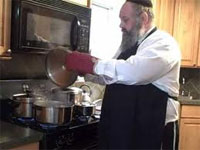
Healthy food choices and dieting are 21st century buzzwords. It seems that more than ever people are making positive dietary changes. For thousands of years, Judaism has offered a dietary blueprint. Not only does the Torah guide us in our food choices, it commands us to separate dairy and meat, and wait a customary length of time between eating meat and dairy dishes. Today, we find Jews of all ages and backgrounds with a growing interest in kashrus and kosher homemaking. For first-hand accounts of people who have kashered their homes click here.

Definitions
The Jewish religion incorporates within its tenets a regimen of dietary laws. These laws determine which food is acceptable and in conformity with Jewish Law. The word kosher is an adaptation of the Hebrew word meaning fit or proper. It refers to foodstuffs that meet the dietary requirements of Jewish Law.
 STAR-D
 STAR-S